Planning your trip
The Best Time to Go Birdwatching in The Gambia, Month by Month
The Gambia has birds in every month. Here is what each season offers, what it costs you in heat or rain, and how to choose.
Published by Gambia Birding Team · · 7 min read
If you are planning a birdwatching trip to The Gambia, the first question is usually when to go. The short answer is that there is no bad month for birds, but there are better months for particular things: migrants, breeding colours, raptors, comfort or quiet.
This guide walks through the year season by season, then month by month, and says plainly what you give up in each. It is written for first-timers, so there is no jargon you will not meet again later in the text.
Key takeaways
- For the widest choice of birds with the most comfortable weather, aim for late November to February: migrants have arrived, there is no rain and the mornings are cool.[1][2]
- The rainy season, roughly June to September, is the breeding season. Birds sing and show their full colours, but it is humid and wet, with August the wettest month.[2][3]
- March to May is hot and dry. Birds gather at the remaining water, which can make them easier to find, but the heat is real: Banjul has recorded 41°C in both April and May.[1][3]
- No single trip shows everything. One local guide notes that “a series of trips in different seasons would be required” to see the full range.[2]
The short answer
Most visitors come between November and March,[2] and for a first trip that is sensible advice. It is dry, the mornings are pleasant, and European migrants are present alongside the African residents. One UK operator schedules its tour in November precisely because the vegetation is still green after the rains and European migrants are arriving.[5]
But “best” depends on what you want. If you would like the broadest bird list, go in the dry season. If you want to see birds in breeding plumage, and do not mind a shower, go in the rains. If you can only travel in May, you will still see birds, just fewer visiting birders and a lot more heat. Local guides say it in so many words: the country is good all year.[2]
The year in four seasons
It helps to think of The Gambia's year as four phases rather than twelve months. The dates blur at the edges, and the sources below do not agree to the week, but the pattern is clear.
Late rains and early arrivals (October to mid-November)
The rains have ended, and humidity falls.[2] One local guide notes that bishops, whydahs and weavers, which are small birds whose males grow showy breeding plumage, can still be spectacular, and that many young birds have recently fledged.[1][2] The first migrants from Europe begin to arrive.[2][4] It is a lovely time, though some operators only start their tours late in the month.
The classic dry season (mid-November to February)
This is the peak. Migrants from the north and south are both arriving, so the number of species is large and varied.[1] December has no rain, with cool mornings and evenings, and January and February add more birds of prey as conditions dry out.[1] For example, one company runs a late-January tour that expects 220 to 260 species.[7] River levels are low, which suits trips upriver.[1]
Hot and dry (March to May)
Northern migrants start to leave: Access Gambia says they depart in March or April,[4] while another guide has them leaving from early to mid-February.[1] So the exact timing varies, but by April the winter visitors are mostly gone. In return, you get shrinking water and gathering birds. March is described as “the best time to see Coursers and Sandgrouse”, two groups of ground-dwelling birds that are hard at other times.[2] April is very hot and dry, and the lack of water concentrates the birds at what remains, which makes them easier to find.[2] Plan on early starts and a long midday rest.
The rains and the breeding season (June to September)
Gambia's short rainy season normally lasts from June to September.[3] One guide says the rainy season “equals the breeding season for many species”, with birds singing and displaying in full colour, though the humidity can be uncomfortable.[2] Another notes that this is when species arrive that are rarely seen in other months, as birds from the south reach The Gambia for the rains.[1][4] Rain comes in bursts: some spells last several days, and others pass more than a week without any.[1] It suits patient, keen birders better than someone who wants easy walking.
Month by month at a glance
Here is the same information in a table. “Best for” is a summary of the sources, not a promise: a given week can always differ.
| Month | Weather | Birds | Best for |
|---|---|---|---|
| January | Dry; days 26 to 31°C[1] | Migrants present, raptors increasing[1][2] | The widest list |
| February | Dry; days 26 to 31°C[1] | Migrants start leaving mid-month; many raptors[1] | The widest list |
| March | Dry and hotter; days 27 to 32°C[1] | Coursers and sandgrouse; plenty of raptors[2] | Dry-country specialities |
| April | Very hot and dry[2] | Birds gather at shrinking water; migrants leaving[2][4] | Birders who can cope with heat |
| May | Hot, dry, rains approaching[1] | Breeding season begins from late May[2] | Quieter trips |
| June | Rains begin, but often light[1] | Birds prepare to breed; southern birds arrive[1][4] | Early breeding activity |
| July | Rain in bursts[1] | Breeding in full swing, full plumage[1][2] | Breeding plumage, a green country |
| August | Wettest month; about 347 mm in Banjul[3] | Breeding in full swing[1] | Patient birders only |
| September | Humid, end of the rains[2][3] | Breeding season continues[2] | Breeding plumage, green landscapes |
| October | Drier, less humid[2] | Bishops, whydahs and weavers still colourful; first migrants[2][4] | A gentle early start |
| November | No rain; days 26 to 31°C[1] | Migrants arriving; species numbers rising[1][5] | First-timers, green scenery |
| December | No rain; cool mornings, days 25 to 30°C[1] | Residents and migrants together[1][2] | A balanced first trip |
Resident birds, migrants and why it matters
Part of the confusion about “best time” comes from three kinds of bird. Residents stay all year. Northern migrants (also called Palearctic migrants) breed in Europe and spend the northern winter in West Africa: Access Gambia says they arrive from October and go back in March or April.[4] Southern migrants do the opposite and arrive with the rains.[4]
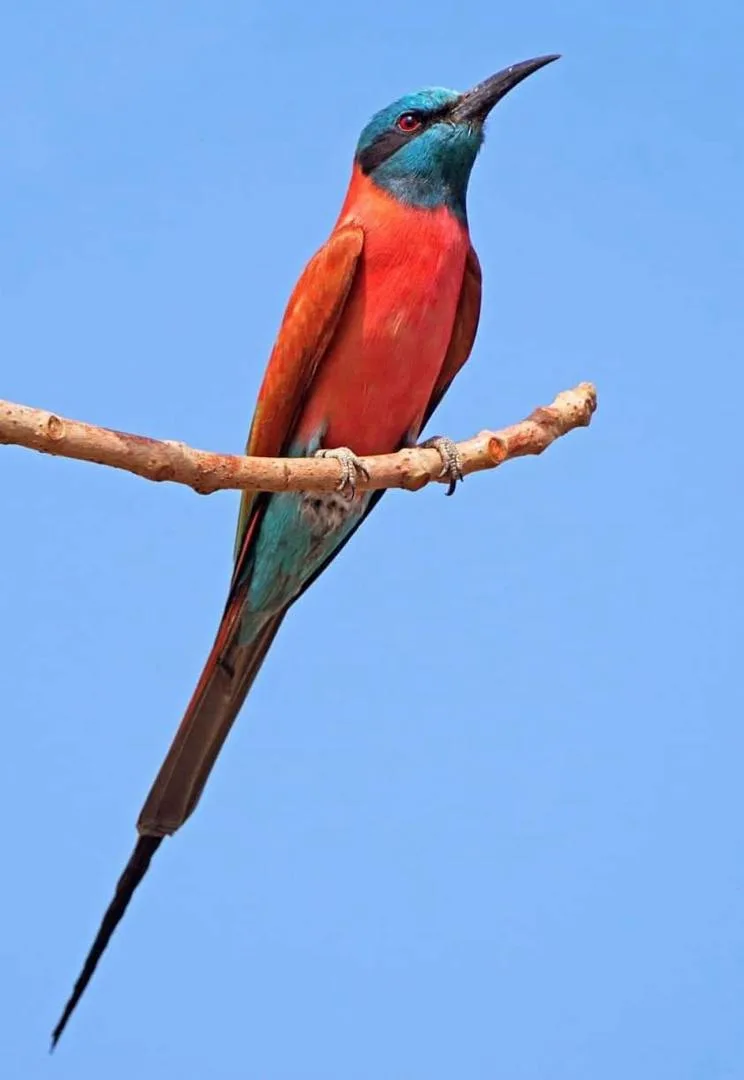
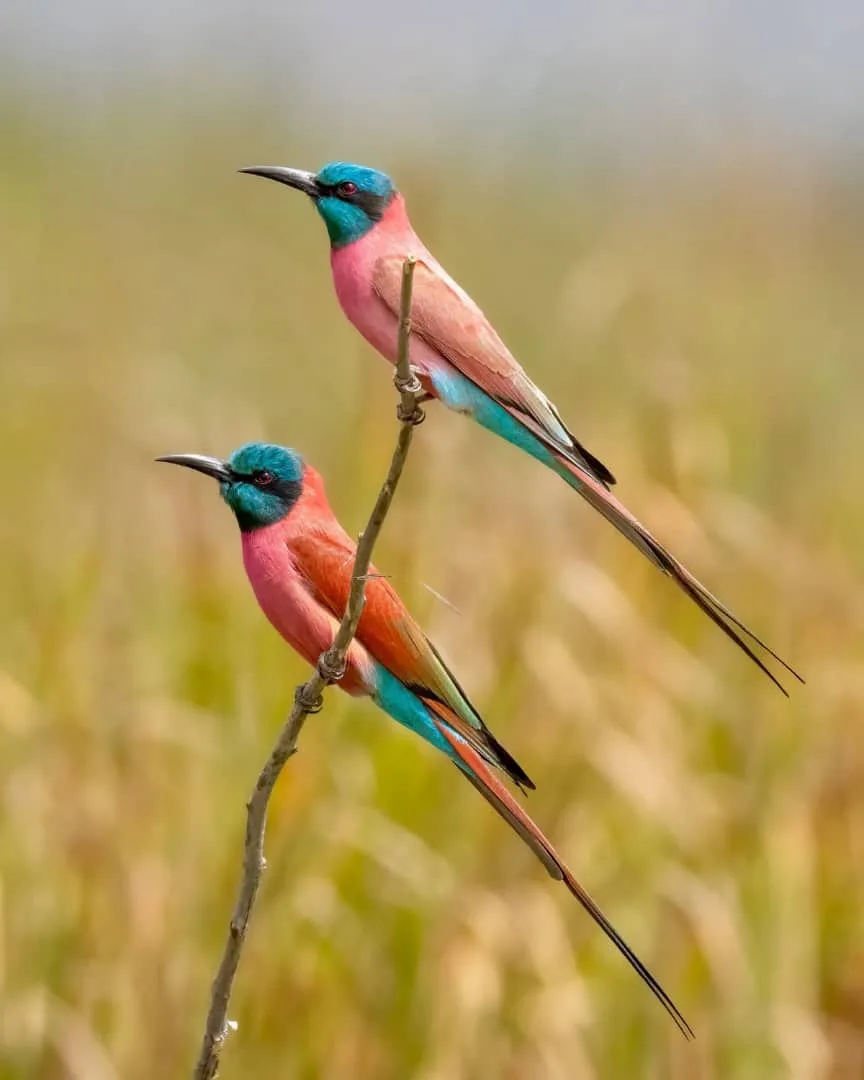
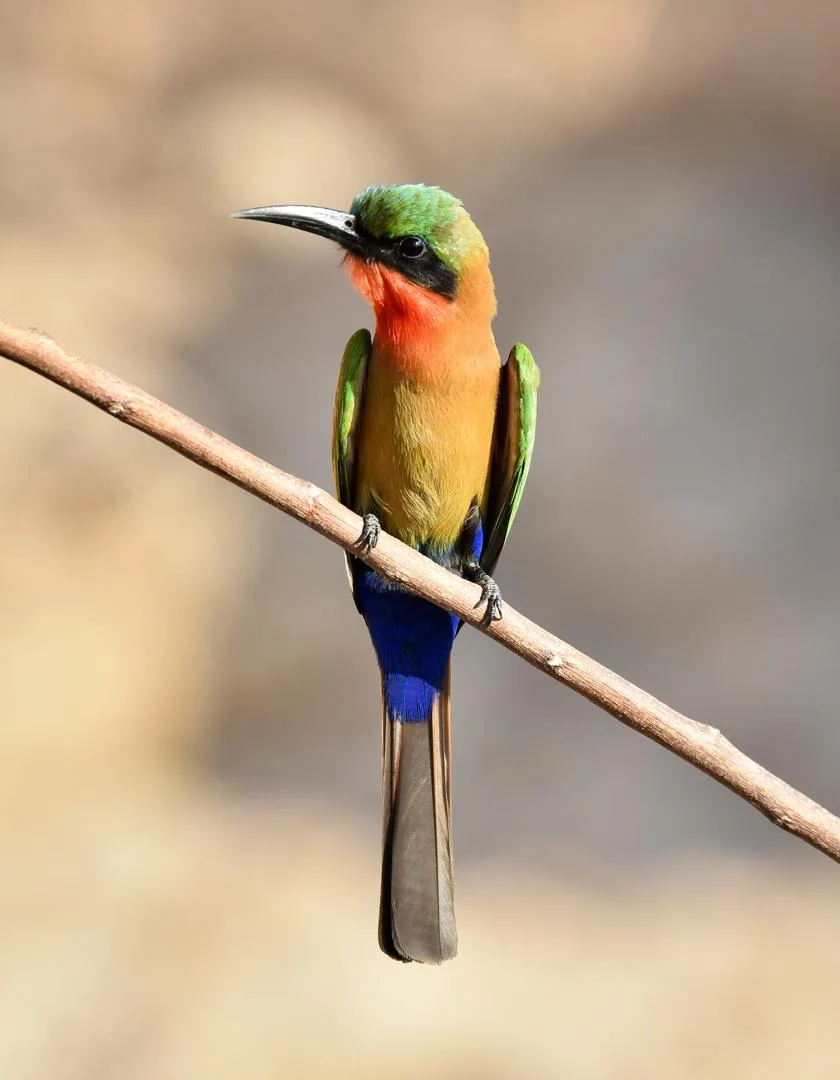
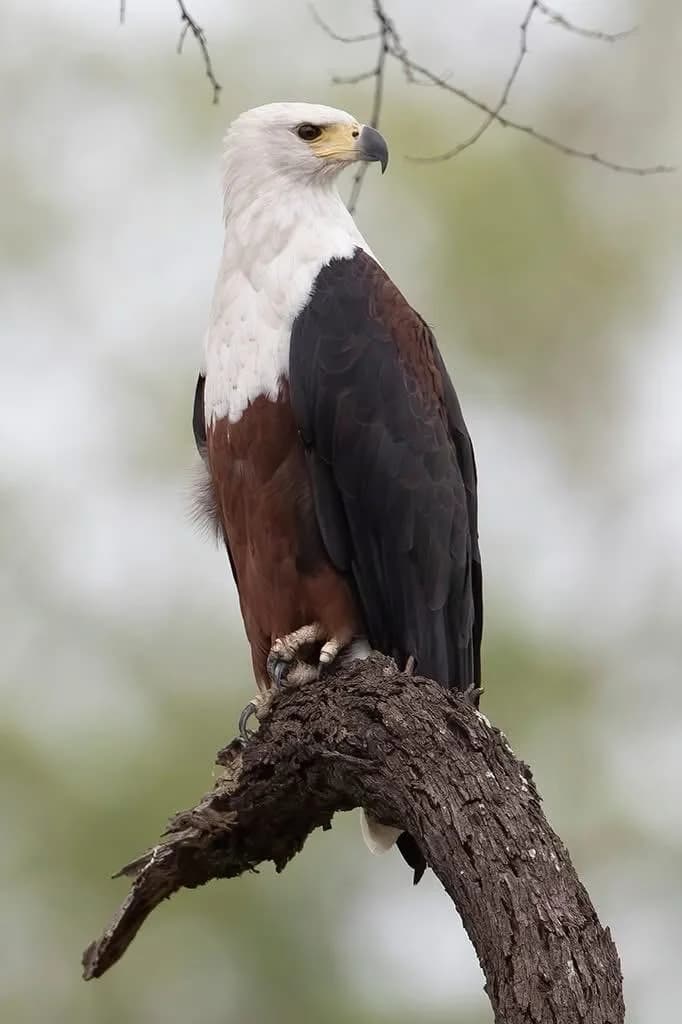
For a beginner this means that some birds are safe bets whenever you come. The Red-throated Bee-eater and the African Fish Eagle are year-round residents, for instance, while the Northern Carmine Bee-eater is a seasonal visitor, so check the month if it is on your list. A November tour is also described by one operator as a good time for the Egyptian Plover, a sought-after river bird.[6]
How to choose for your trip
- First trip, want the most birds and easy conditions: late November to February.
- Want to see Europe's winter visitors: December to February, before they start to head north.
- Want breeding colours and green landscapes, and can tolerate rain: July to October.
- Want to avoid crowds and can stand the heat: April and May, with early starts.
- Beach holiday with a few birding mornings: any time, but note that one source suggests staying near the coast in the hot months, where it is slightly cooler.[1]
If you are also thinking of adding Senegal, the same seasons broadly apply, and the Senegal destination page explains what the border adds. You can also see how timings fit into Yaya's tour itineraries, or read the months section of our birds guide. If your first trip is still a question mark, start with our beginner's guide to birdwatching in The Gambia.
Frequently asked questions
What is the best month to go birdwatching in The Gambia?
There is no single best month. Most visitors come between November and March,[2] and December to February offers dry weather with both migrants and residents present.[1] If you want breeding plumage, the rainy months are better.[2]
Can I go birdwatching in The Gambia in the rainy season?
Yes. The short rainy season normally runs from June to September,[3] and local guides describe it as the breeding season, when many birds are singing and in full colour.[2] The trade-offs are humidity and rain that can last several days.[1]
When do European migrant birds arrive and leave?
Northern migrants begin arriving in October and mostly head back in March or April,[4] although one guide has them starting to leave from early to mid-February.[1] December and January are the safest months to see them.
Which months are too hot for birding?
April and May are the hottest, with Banjul having recorded 41°C in both months.[3] Birding is still possible: birds gather at the remaining water, but you need early starts and a long rest at midday.[2]
Is it worth going at the very start of the season, in October?
It can be. Humidity has dropped, bishops, whydahs and weavers can still be spectacular and many young birds have fledged,[1][2] though the migrant numbers have not yet built up and some operators do not begin their tours until later in the month.
The bottom line
If you want one simple rule, go between late November and February: dry weather, cool mornings, migrants and residents together. But a Gambian bird year has something to offer in every season, and the best month is the one that matches what you care about and how much heat or rain you are happy to accept.
If you would like help choosing dates, get in touch with when you can travel and what you would like to see. Yaya will reply himself, and can match the season to the birds on your list.
Go deeper
Birds in this guide
Places to visit
Tours that cover this
References
- [1] Senegambia Birding. Seasons in The Gambia and Senegal. Accessed 13 October 2026.
- [2] The Gambian Bird Guide. When to go birding in The Gambia. Accessed 13 October 2026.
- [3] Wikipedia. Gambia (climate). Accessed 13 October 2026.
- [4] Access Gambia. Birdwatching in The Gambia. Accessed 13 October 2026.
- [5] Birdfinders. The Gambia birding tour. Accessed 9 October 2026.
- [6] Naturetrek. The Gambia (tour GMB01). Accessed 9 October 2026.
- [7] Oriole Birding. The Gambia: birding the Smiling Coast. Accessed 9 October 2026.
Photographs by Yaya Barry, taken in the field in The Gambia and Senegal.